styles
Zellige patterns
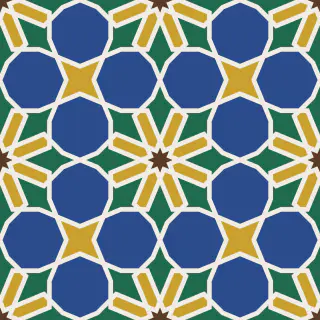
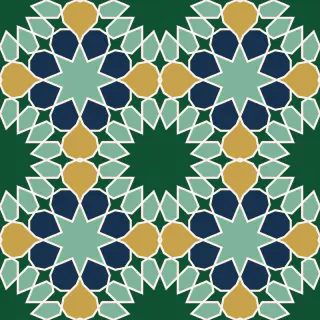
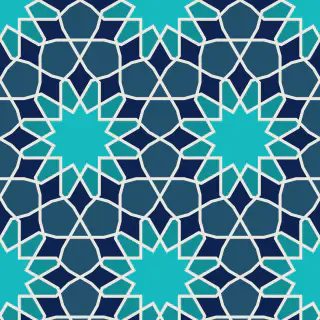
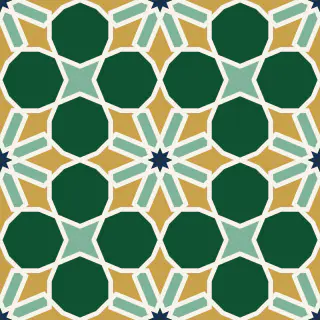
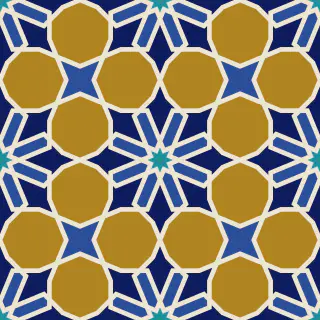
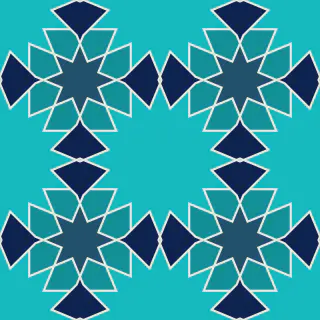
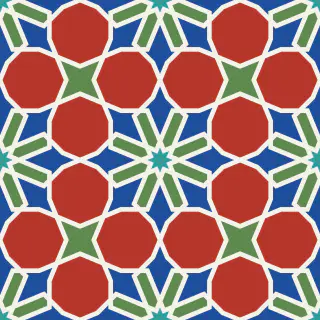
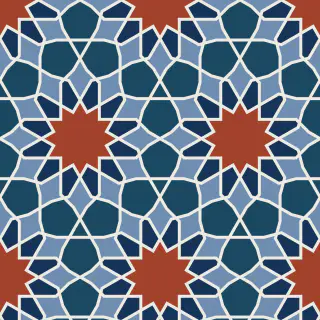
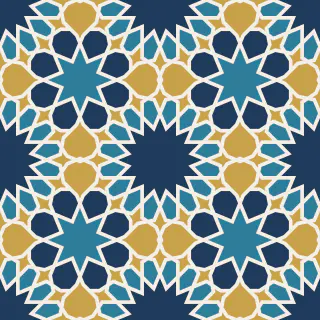
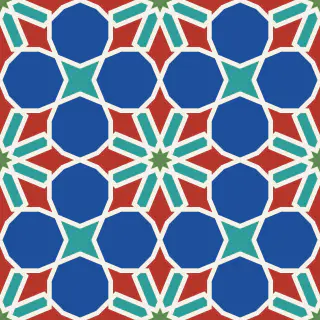
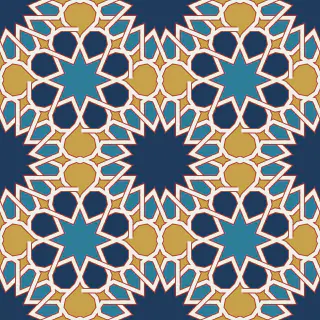
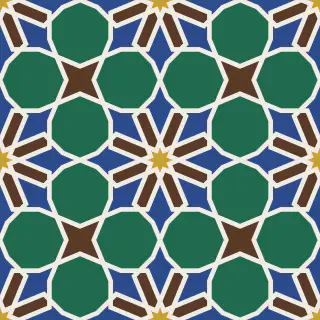
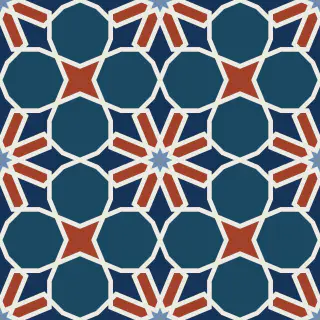
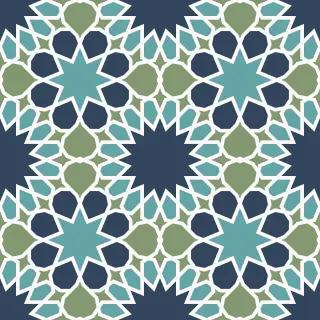
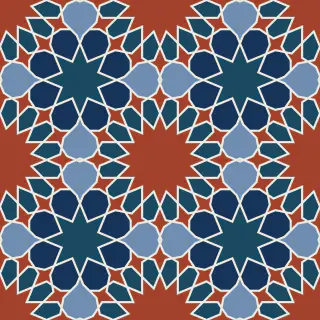
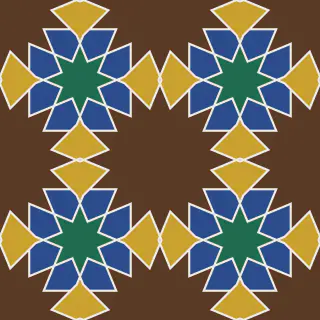
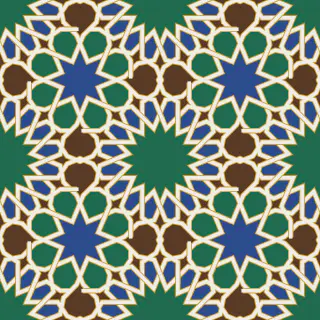
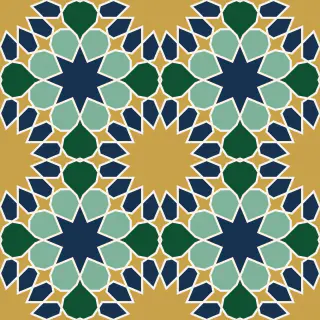
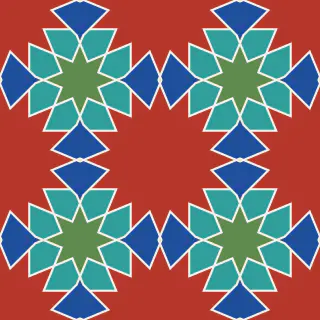
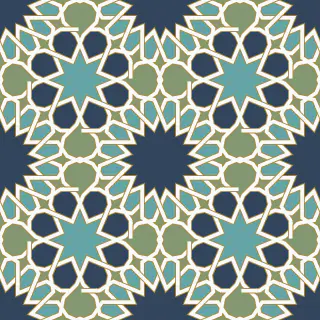
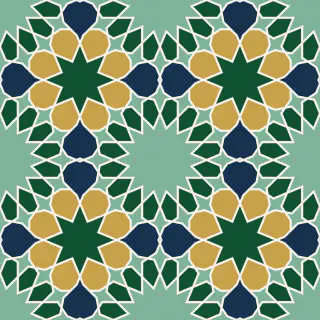
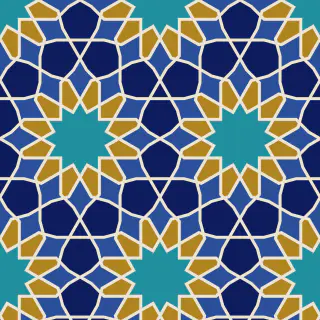
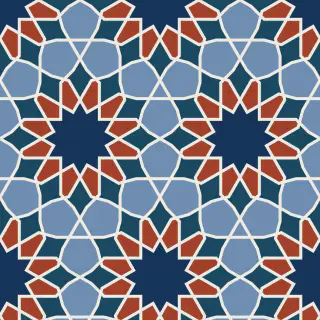
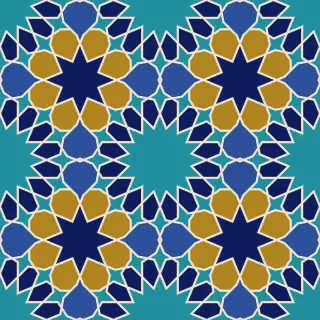
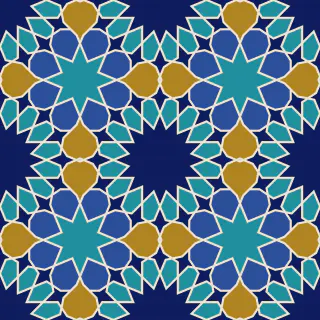
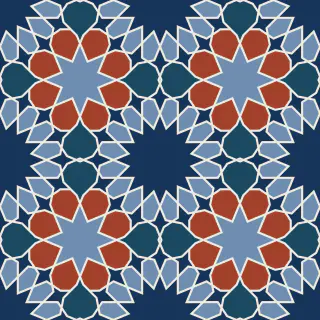
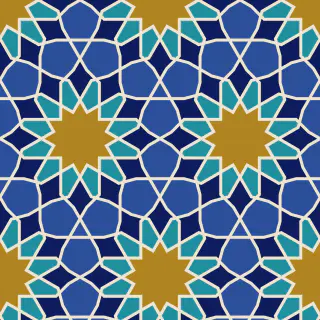
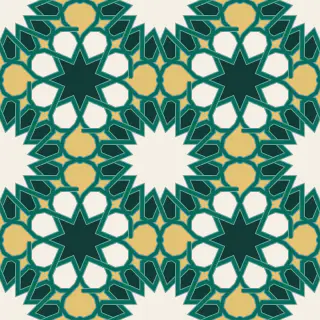
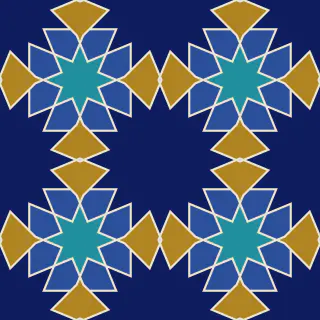
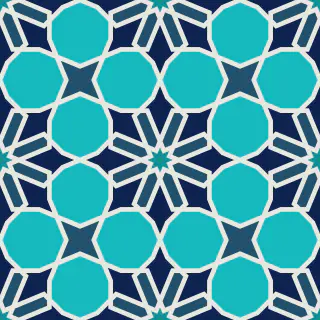
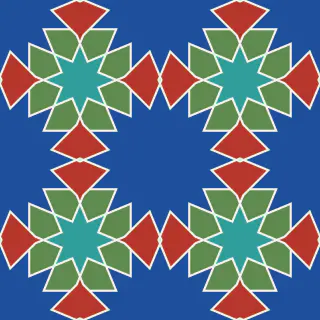
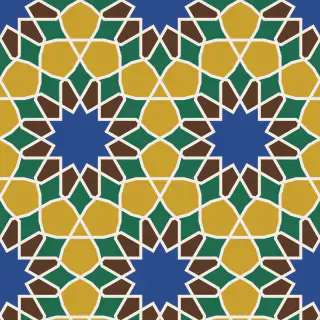
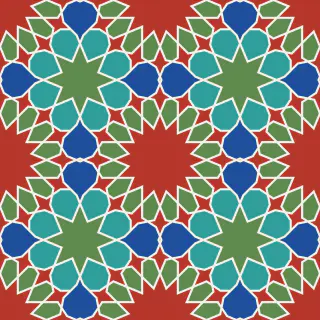
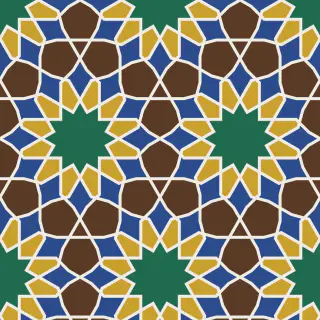
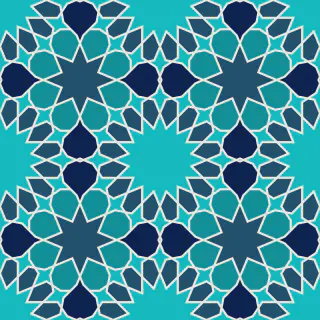
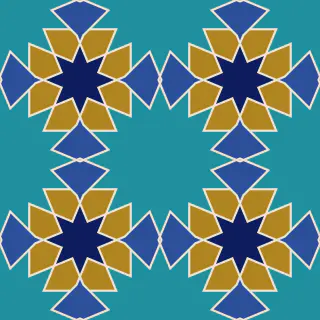
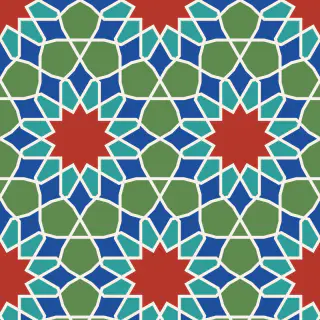
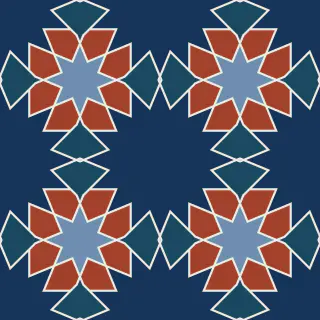
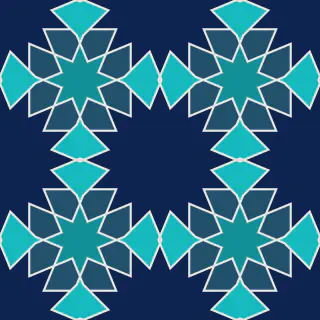
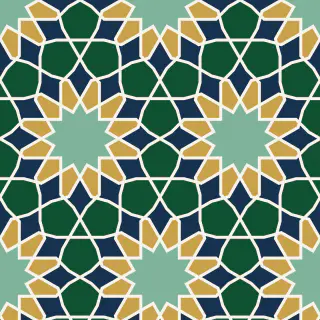
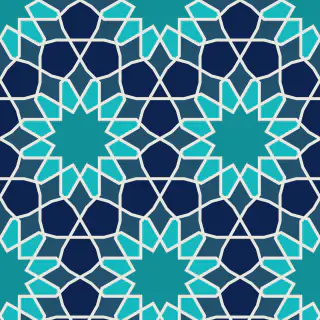
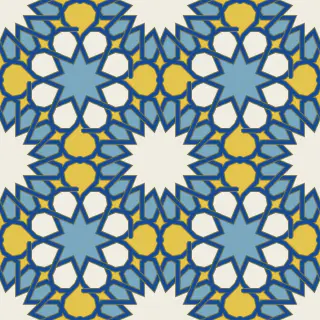
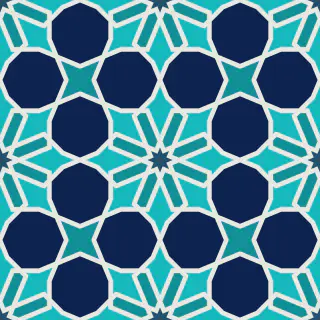
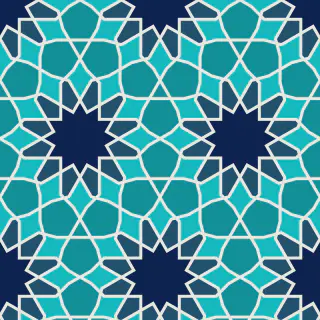
Zellige patterns built from sixteen-, twelve- and eight-point rosettes in Fez green, blue and honey.
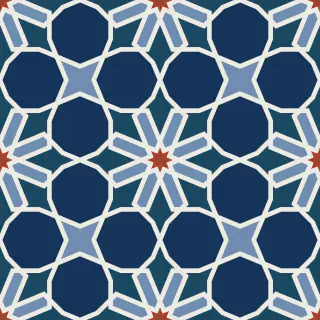
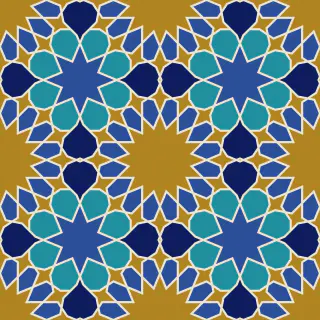
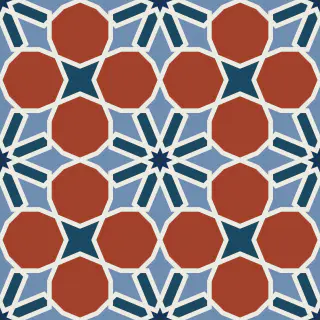
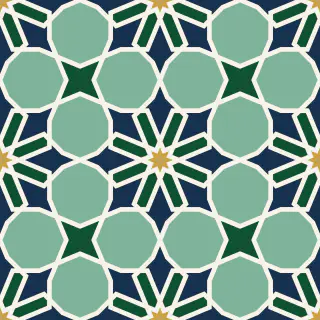
No patterns match this color.
Zellij, also spelled zellige or zillij, is mosaic tilework of hand-chiseled glazed pieces in tessellated patterns, says Wikipedia’s Zellij article. These are seamless Moroccan tile pattern files in SVG and PNG, not physical tiles to buy. For the quatrefoil lattice, see Moroccan trellis patterns.
What is zellij?
The article notes the name comes from Arabic zalaja, “to slide,” after the smooth glaze; in Spain it is called alicatado, from an Arabic verb meaning “to cut.” Glazed square tiles, typically 10 cm a side, are hand-cut with a small adze-like hammer, laid face down, and backed with plaster or whitewash to bind a panel.
A short history of zellij tile
Wikipedia says the craft was probably inspired by Byzantine mosaics and adapted to faience. Early pavements come from 1068–1091 palaces at Qal’at Bani Hammad in Algeria; Jonathan Bloom cites the mid-12th-century Kutubiyya Mosque minaret in Marrakesh as Morocco’s earliest reliably dated zellij. Complex zellij spread in the first half of the 14th century under the Marinid, Zayyanid and Nasrid dynasties on lower walls, fountains, minarets and floors. The Saadian Tombs later set finer colored strapwork on white, and under Moulay Ismail (1672–1727) zellij covered the gate facades of his Meknes citadel. Fez remains the main center.
Moorish and Alhambra tile patterns
Wikipedia’s Alhambra article notes most Nasrid palaces date to the 14th century under Yusuf I and Muhammad V, pairing Alhambra tiles on lower walls with carved stucco above. That Alhambra pattern joins geometric and vegetal motifs with inscriptions; at the Mirador de Lindaraja and Torre de la Cautiva, colored letter-shaped pieces sit in white, some as little as 2 millimeters wide. Wikipedia’s Moorish architecture article notes that Moorish design, also called Hispano-Moresque, continued largely unchanged in Morocco across wood, stucco and tilework.
Zellige colors
Wikipedia’s Zellij article notes that the 14th century added yellow (iron oxides or chrome yellow), blues and dark brown manganese, and 19th- and 20th-century palaces added red, bright yellow and dark blue with larger rosettes. The patterns come in the green, blue and honey of Fez, and in white, turquoise and emerald.
Which zellige pattern to pick
The patterns follow the polygons-in-contact method Hankin described, so light grout lines run around each tile piece. They come as sixteen-point rosettes, a star without petals, eight-point rosettes, twelve-point rosettes and a woven over-and-under version. Each kind of piece takes one color, so neighbors differ. These are new designs, not copies of a building.
How to use zellige patterns
Each zellige pattern downloads as seamless SVG and PNG files for Moroccan wallpaper, prints, digital paper or a Moroccan tile stencil. Open the sixteen-point, eight-point, twelve-point or woven zellige in the pattern generator, or browse Islamic geometric patterns.
Sources: Zellij (Wikipedia) (name, history, fabrication, Fez); Alhambra (Wikipedia) (Nasrid dates and decoration); Moorish architecture (Wikipedia); Tile, Mosque of Mulai Idris, Fez (17.44.3), The Met (source of the Fez zellij palette)