styles
Lattice patterns
Open nets of crossing lines, from curved Moroccan trellis to straight garden and Chippendale lattices.






































No patterns match this color.
A lattice is a framework of crossing strips, usually wood or metal, laid out as a grid or a weave. Builders use it to let air through, to give privacy, or simply as decoration. In India, stone screens called jalis shield upper balconies, keeping them cool and private. A garden trellis is the same idea put to work holding up climbing plants. Its name goes back to the Latin for a bower of greenery, and in 17th-century France trellis became decorative work made by specialist craftsmen, the treillageurs.
Lattice patterns draw nets of lines rather than separate motifs.
Which lattice to pick: curved or straight
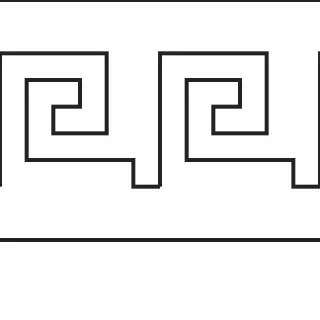
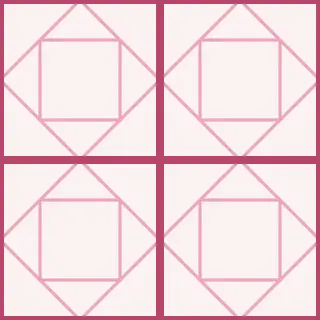
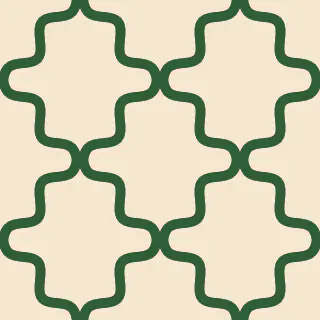
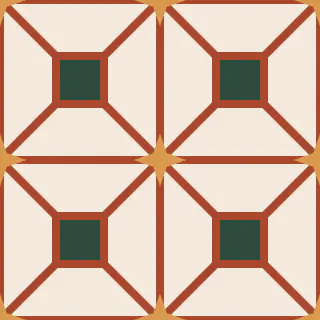
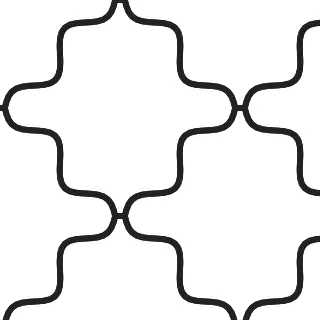
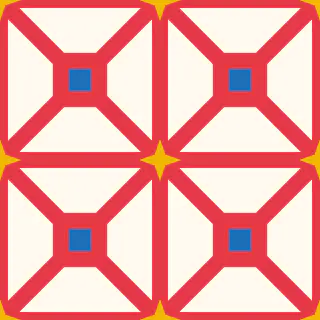
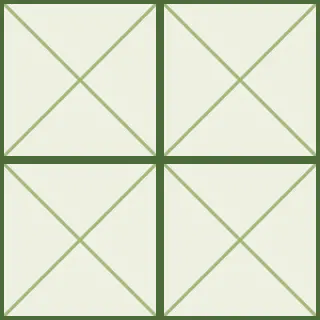
Moroccan trellis gives curved cells: lanterns with a short flat bar at top and bottom and S-curved sides, in a half-drop. Some change the curve (arabesque, keyhole), double the line, or fill alternate cells for a two-tone tile look. Fretwork gives straight lines: diagonal garden slats with rosettes, the Chippendale grid with its diagonals, a round-window grid, and Greek key bands.
How to use lattice patterns
Curved trellis is softer and busier; straight lattices are calmer and more architectural. For a background behind text, choose one color on white with a thin line. Lattices are a natural fit for a Cricut or a laser, because every line joins the next and nothing falls out, but keep the line width up so slats do not snap. Garden lattice in green on cream suits seed-packet labels and garden journals. Dark lines on a light ground print with little ink.
Sources: Latticework (Wikipedia); Trellis (architecture) (Wikipedia)