styles
Zentangle patterns
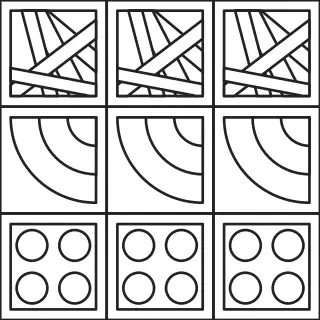
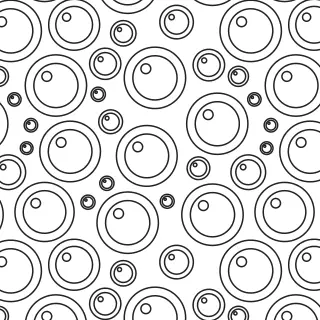
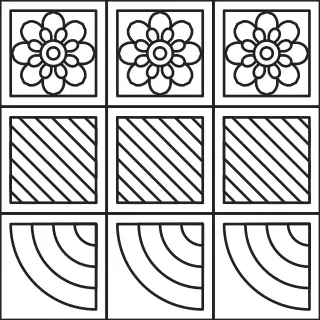
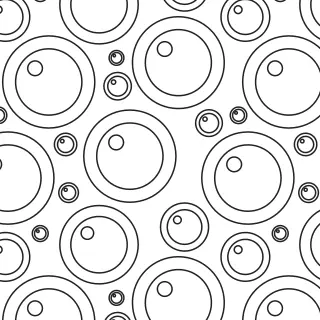
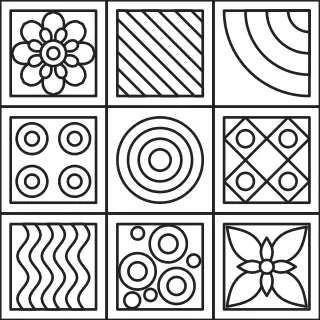
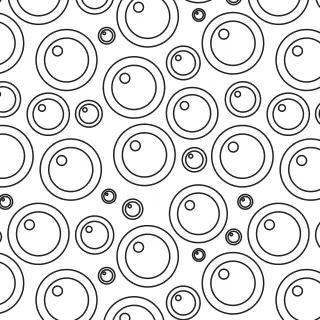
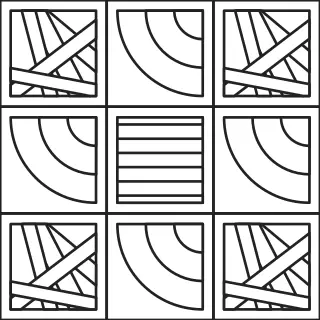
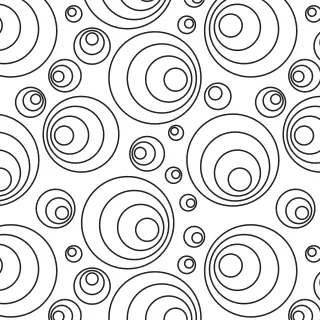
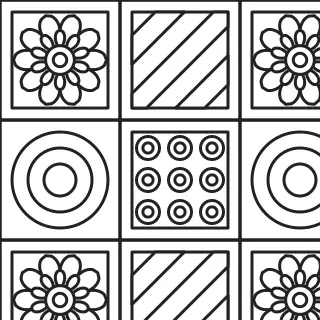
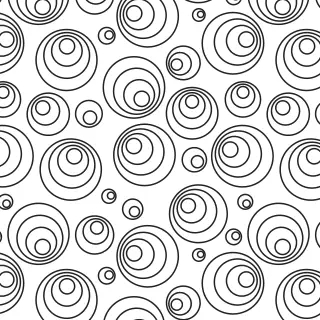
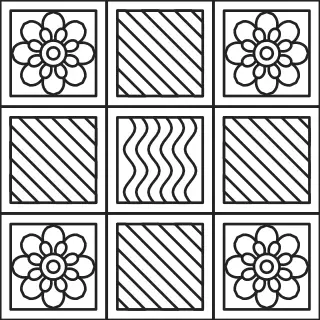
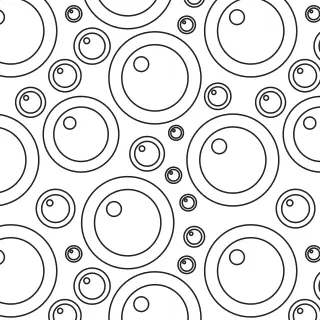
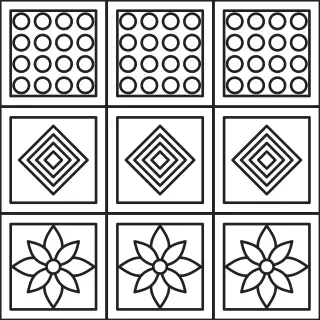
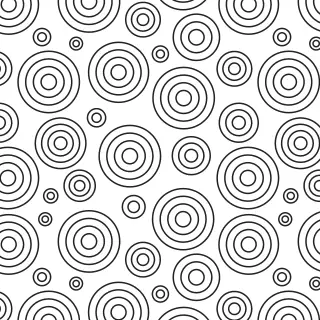
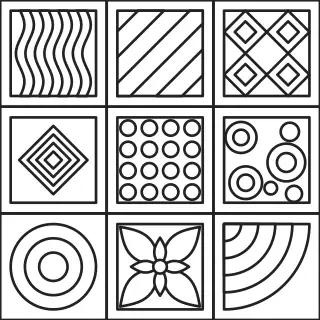
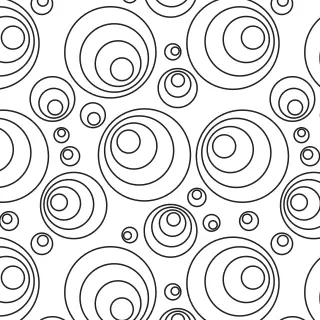
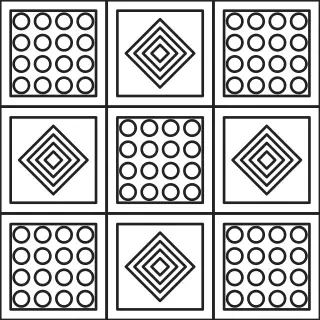
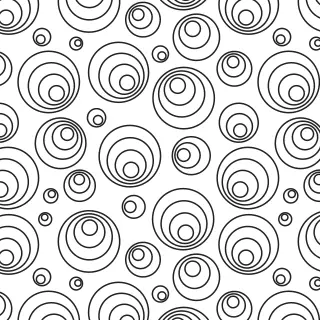
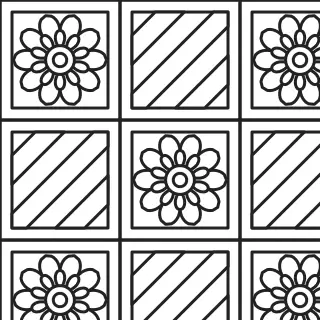
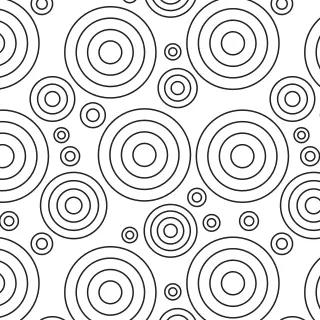
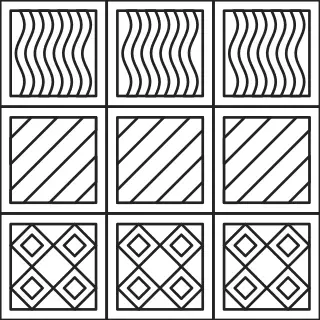
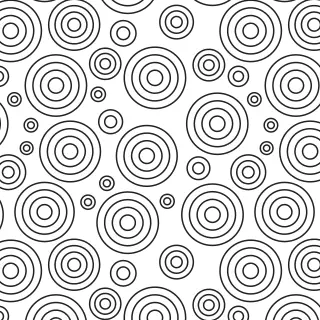
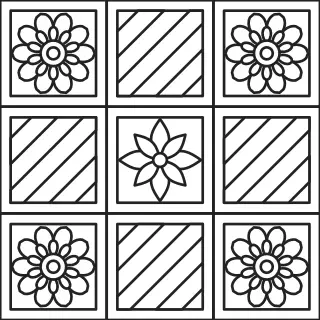
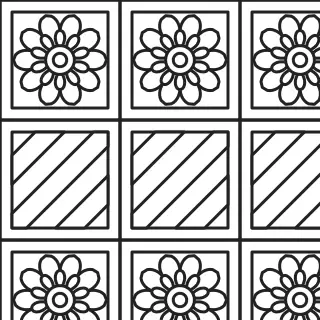
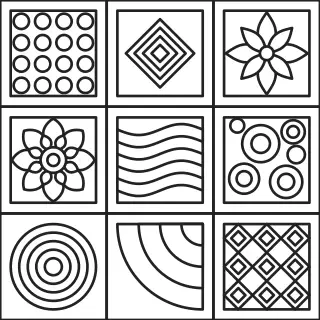
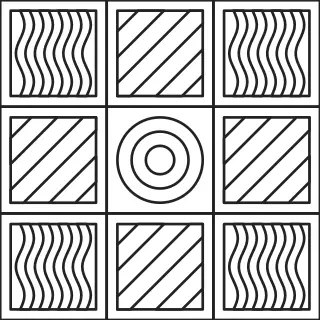
Line art made of small repeated fills: grids of boxes, rings, stripes and petals, and packed pebbles, ready to color or trace.
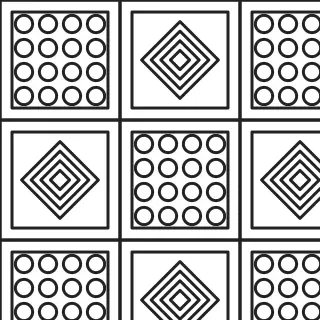
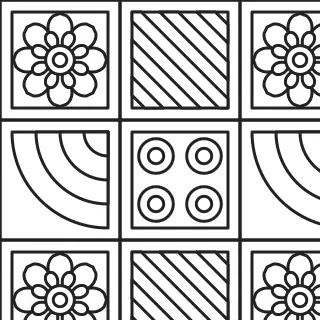
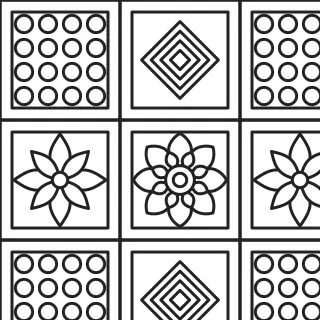
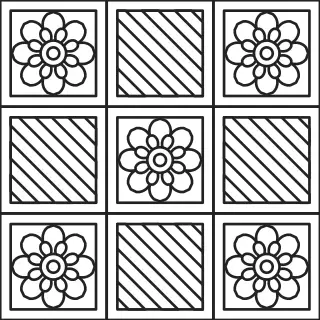
No patterns match this color.
The Zentangle Method, as its makers describe it, is a way of drawing images from structured, repeated patterns called tangles. Tangles are built from a few basic strokes: dots, lines, simple curves, S-curves and orbs. They are drawn on small paper squares called tiles, and the drawing is non-representational, with no fixed up or down. These patterns are new line art in a similar spirit; they are not official Zentangle tiles and are not part of the method.
Which zentangle-style pattern to pick
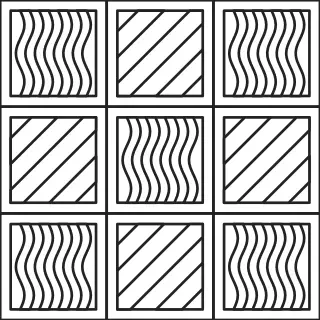
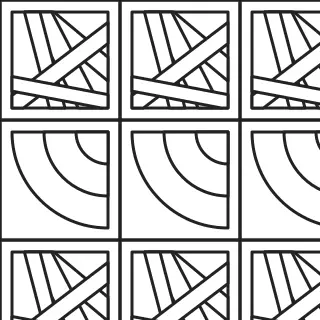
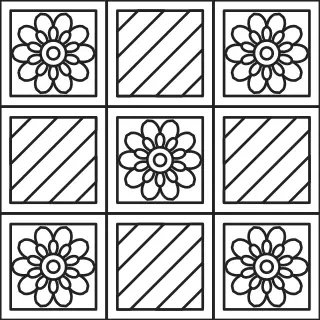
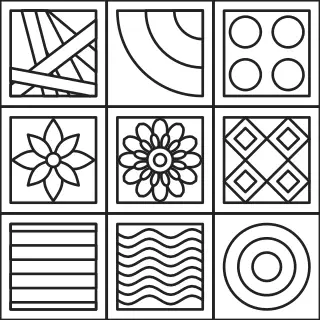
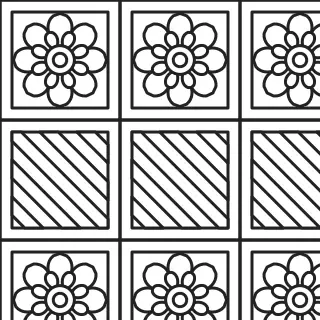
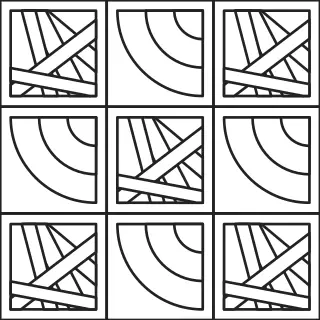
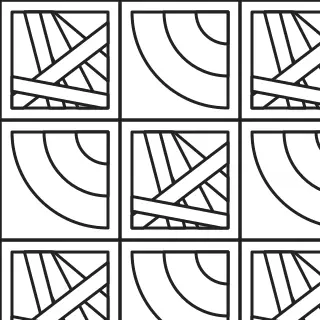
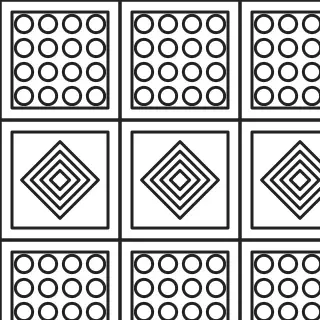
Grid patterns divide the tile into square cells and fill each cell with a different fill: nested boxes, rings around a center, stripes at an angle, dot grids, petals or bands. Every fill stays inside its cell, so the repeat has no seam.
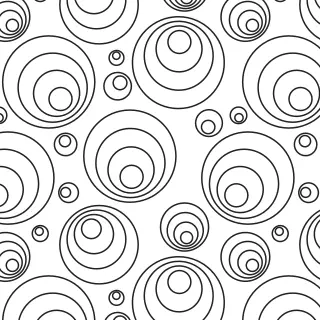
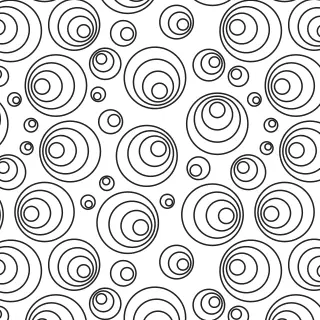
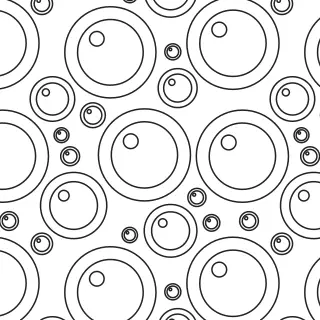
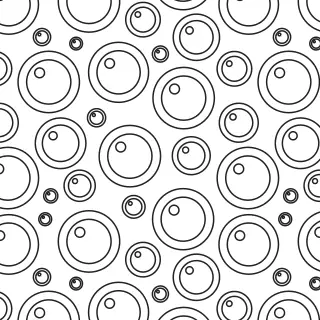
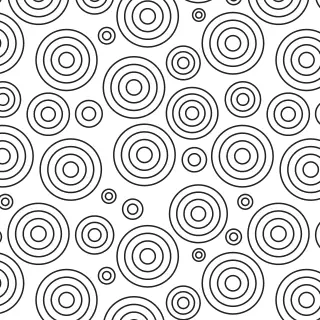
Pebble patterns pack circles of mixed sizes across the tile, none touching. Each circle holds inner rings: offset rings, concentric targets, or a single highlight like a bubble.
Printing, coloring and tracing zentangle patterns
Both kinds are made of closed shapes, so each area can take its own color with pencils, markers or a tablet app. For coloring, pick white with a black line, then print the Letter or A4 sheet; a light ground uses little ink on a home inkjet. Thicker lines are easier for children or for alcohol markers that bleed. For tracing, print at a large scale and lay thin paper over the sheet, or use the SVG in a drawing app. The pebbles also make a calm background behind a bolder geometric pattern.