styles
Terrazzo patterns
Chips of color set in a plain ground, the look of a ground and polished stone floor.
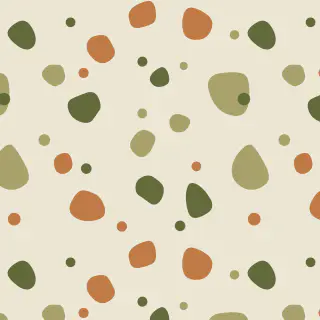

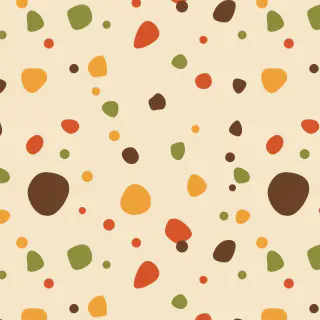
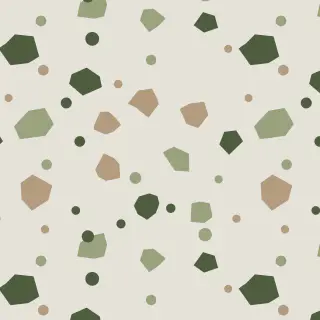




















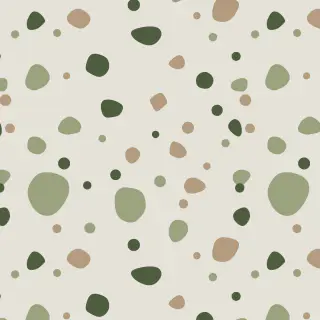


















No patterns match this color.
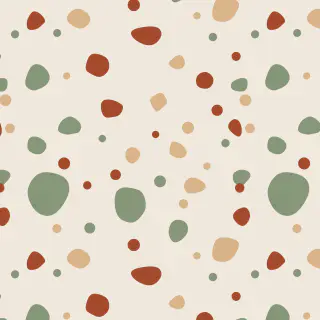
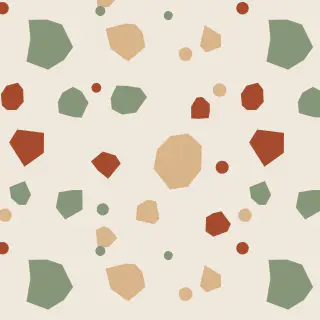
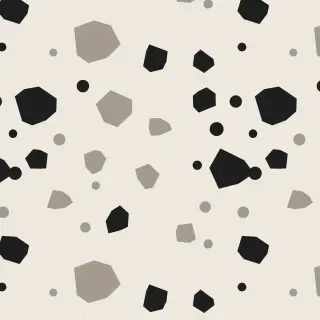
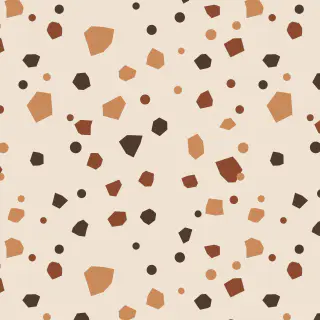
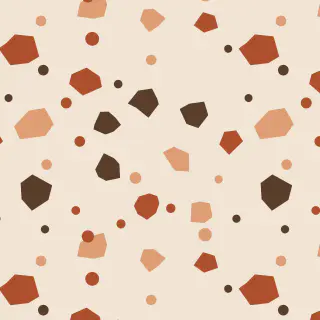
Real terrazzo is a composite: chips of marble, quartz, granite or glass set in a cement or polymer binder, then ground and polished until the surface is flat and evenly textured. These patterns show that look in flat color: chips scattered so no two touch, with small round specks in the spaces between them.
Which terrazzo to pick: shards or rounded chips
Shards are angular pieces with five to eight sides, like broken stone. Rounded chips smooth those corners off and look softer, closer to pebbles. Few or many chips, small or large, with or without the tiny specks, change how busy the floor looks.
How to use terrazzo patterns
A pale ground with three or four muted chip colors gives the classic floor look and prints cheaply. Terrazzo works well as a quiet backing paper behind a busier card front, and as a desk or phone wallpaper because the chips never form lines that fight with text.
Where does terrazzo come from?
The modern material derives partly from the 18th century Venetian pavement, pavimento alla Veneziana. Terrazzo reached the United States in the late 1890s and became popular in the 1920s, when electric grinding machines made it cheaper to lay. Metal divider strips, introduced in 1924, cut down on cracking and let floor makers draw lines and change colors across a floor, which Art Deco and Moderne designers used through the 1940s. The Hollywood Walk of Fame, from 1958, is a well known terrazzo surface. In the 1980s the Memphis designers in Italy used terrazzo too.