styles
Sashiko patterns
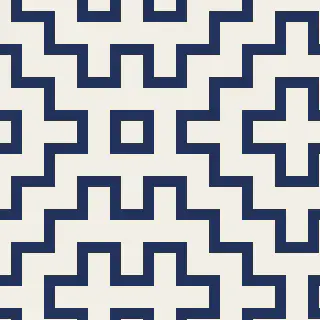
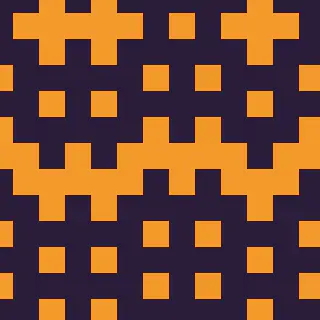
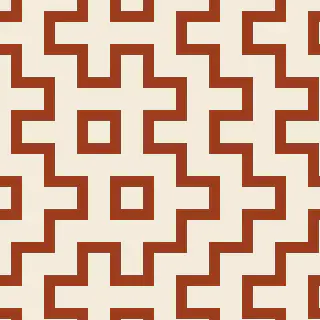
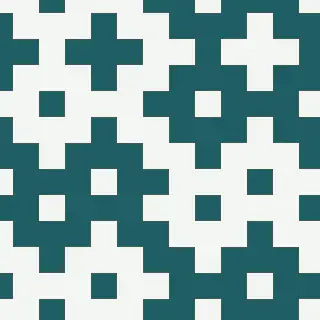
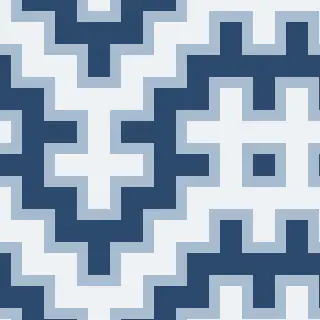
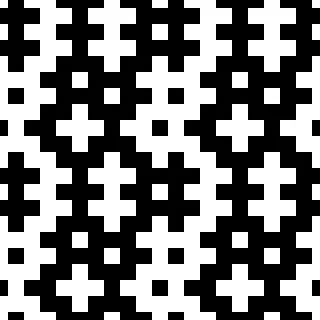
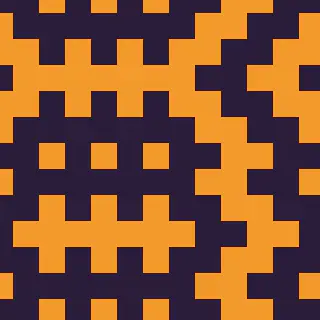
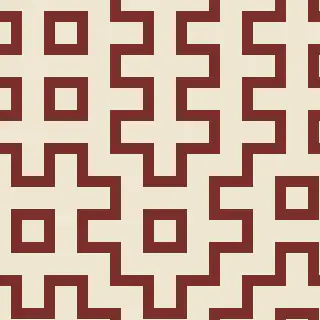
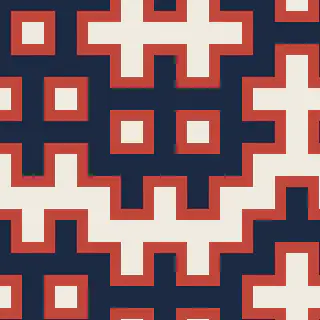
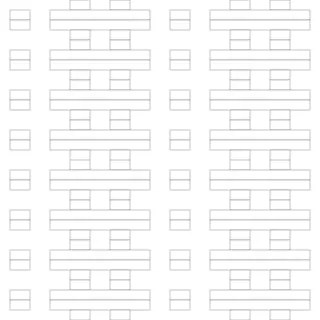
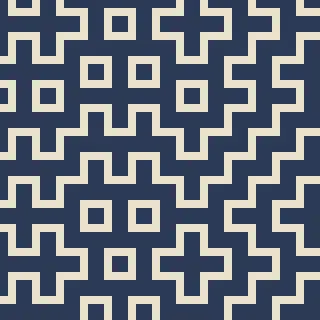
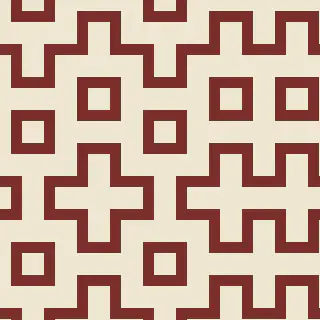
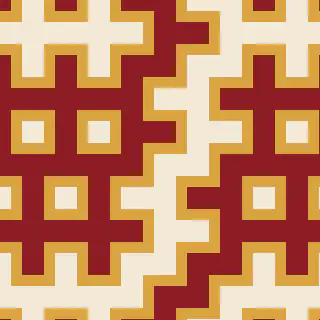
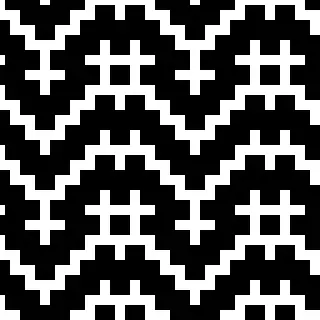
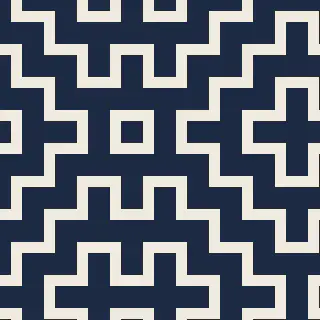
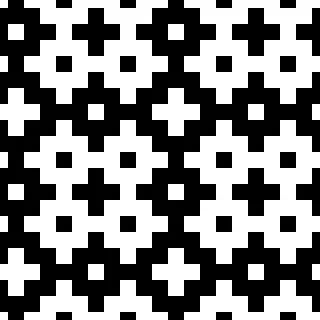
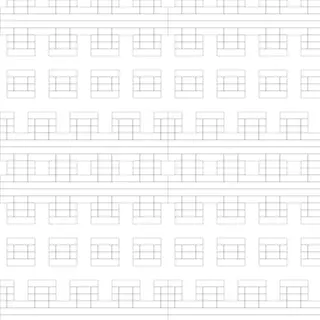
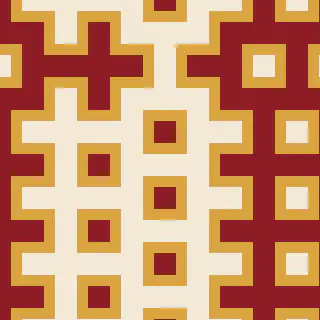
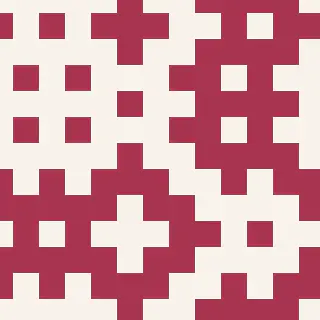
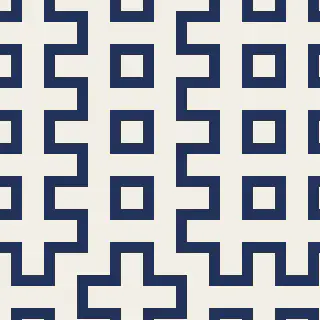
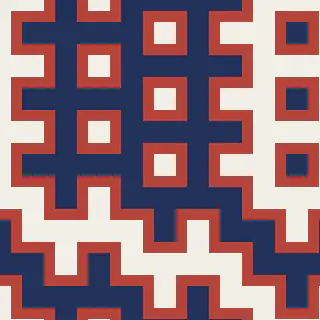
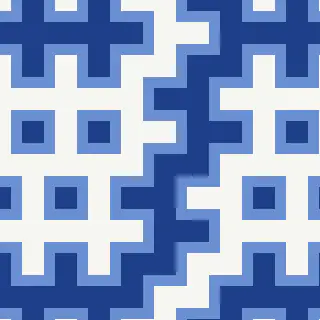
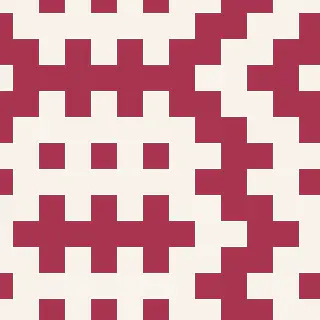
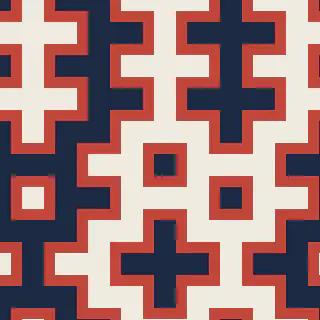
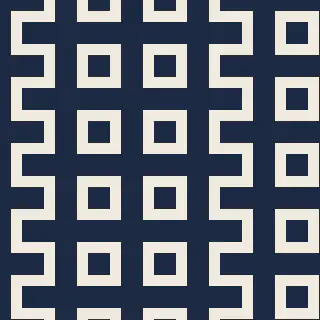
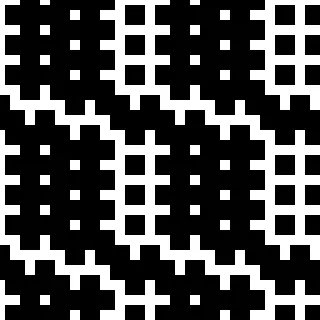
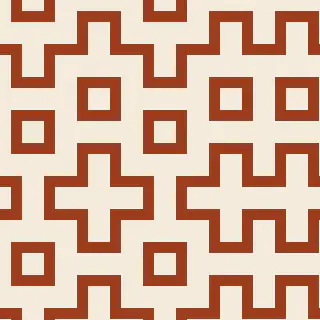
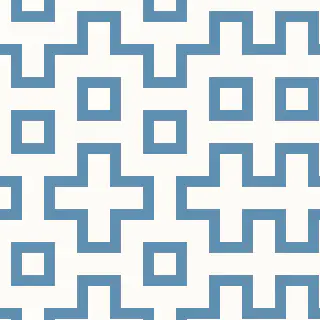
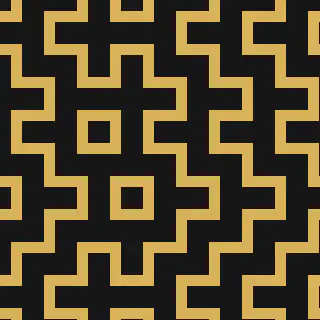
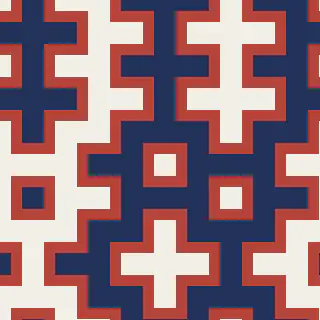
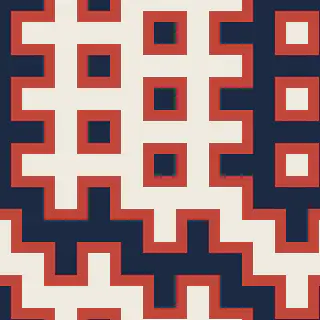
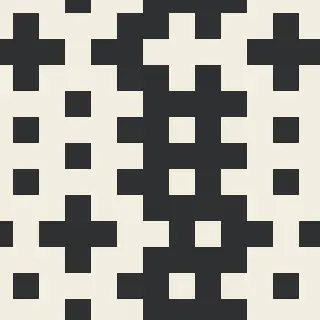
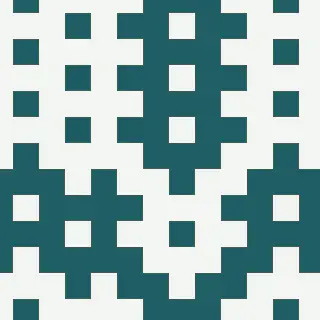
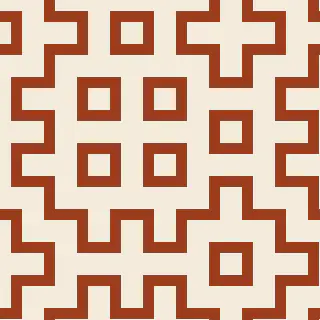
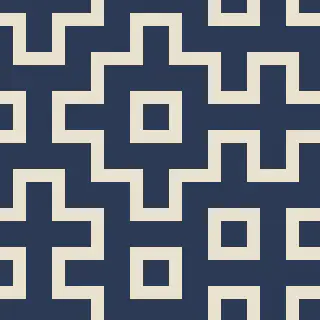
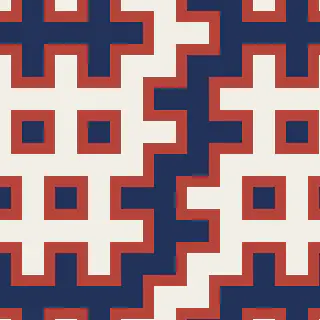
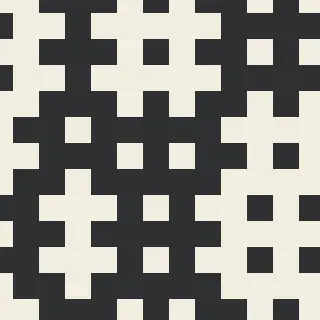
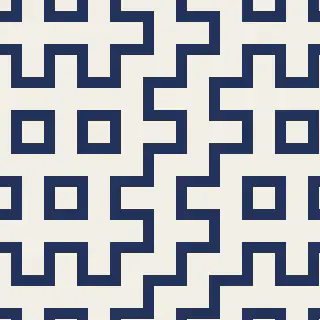
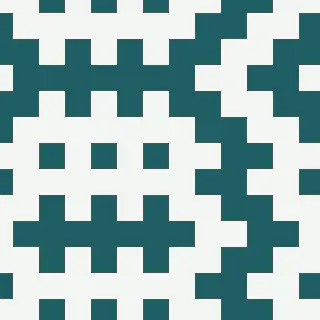
Hitomezashi stitch grids: rows and columns of running stitches that meet in stepped paths, as lines or filled in two colors.







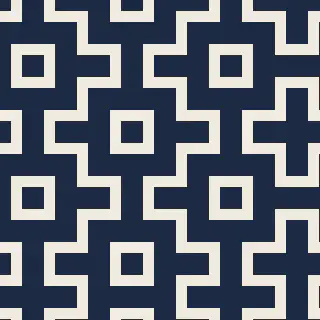
No patterns match this color.
Sashiko is a Japanese running-stitch embroidery that dates from the Edo period. It began as a practical way to strengthen homespun clothes and to hold patches over worn spots, and it later became winter work in northern farming communities. White cotton thread on indigo cloth is the classic look, sometimes with red thread. Wikipedia describes two main kinds: moyōzashi, built from long lines of running stitches, and hitomezashi, where the pattern comes from single stitches lined up on a grid. These sashiko designs are all hitomezashi.
How a hitomezashi chart works
Each chart is a square grid. Every horizontal line starts with a stitch or a gap and then alternates; so does every vertical line. Where the stitches meet they form stepped crosses, steps and zigzag paths. Which lines start on a stitch decides the design, and some repeats are mirrored to be symmetric. The grid runs from 6 to 16 squares across.
Which sashiko chart to pick
There are three versions. Stitches shows the running stitches only, as a marking guide. Two-tone fills the shapes the stitches enclose in two colors. Blocks does the same on a coarser grid, for a bolder, quilt-like look.
Sashiko colors
Dark blue grounds with pale thread are the classic look, and pale cloth with dark blue thread is the reverse. Mustard and charcoal, sea glass greens and denim blues give a modern take.
Stitching from a chart
Print the stitch version at the size you want and count squares, not millimeters: one grid square is one stitch length. Working all the horizontal lines first, then the vertical ones, keeps the count simple. For visible mending on jeans, the denim blues are close to the real colors. The filled versions are for paper, not cloth.
Sources: Sashiko (Wikipedia)