styles
Mosaic patterns
Small pieces set close together with a line of ground between them: the oldest way to build a picture out of tiles.










No patterns match this color.
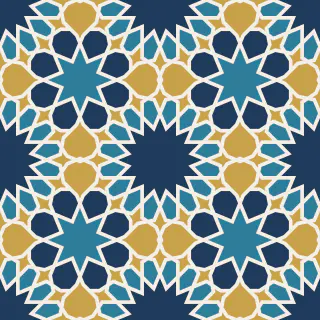
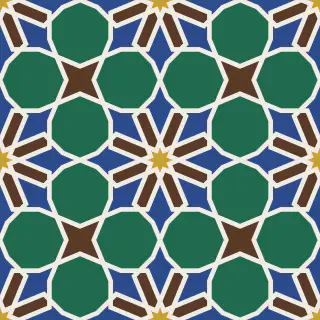
A mosaic is a pattern or image made of small pieces of colored stone, glass or ceramic, held in plaster or mortar. Mosaic patterns come in two quite different kinds that share that idea of small parts.
Which mosaic pattern to pick
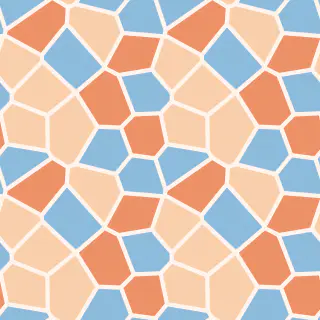
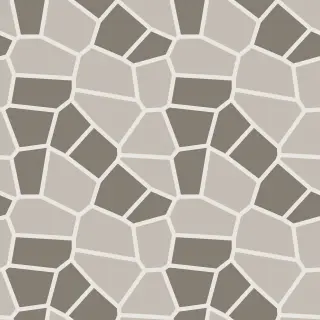
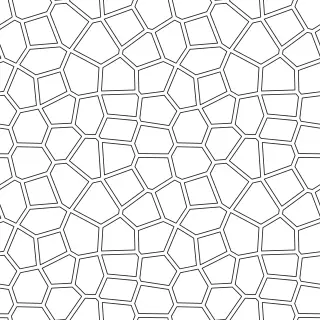
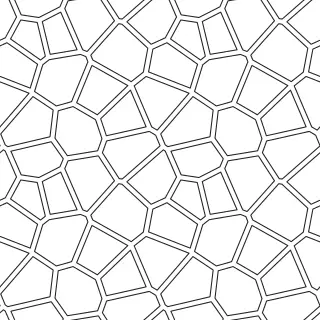
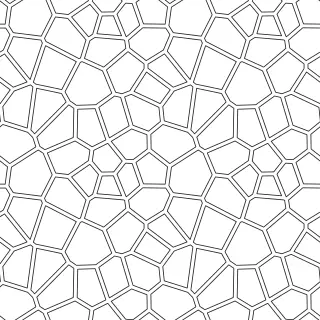
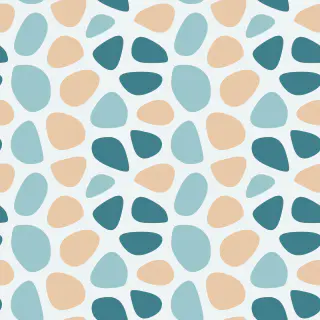
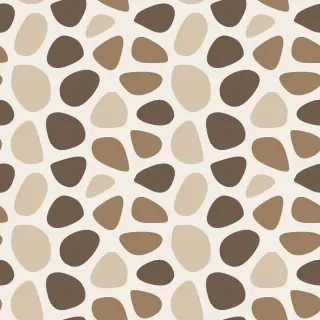
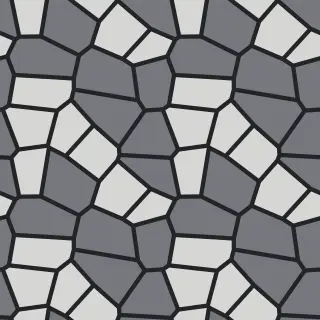
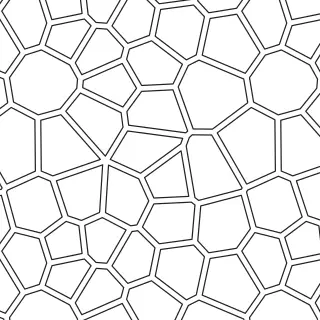
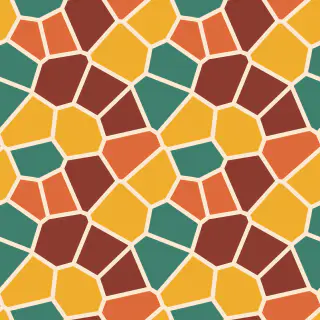
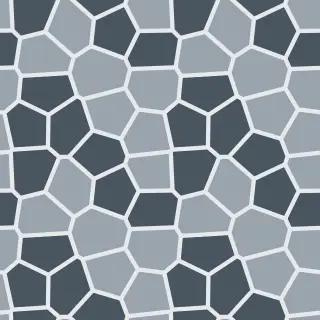
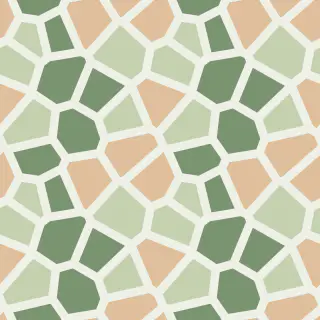
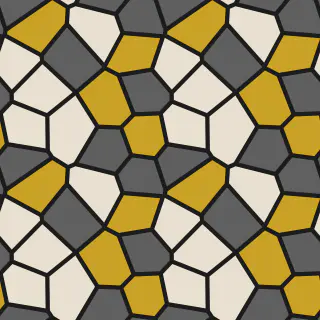
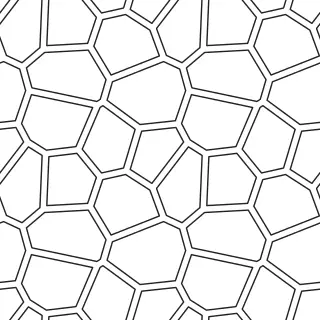
The first is Voronoi cells. Random points split the tile into irregular pieces, and a gap between them leaves the ground showing like grout. With straight edges they look like broken tile or crazy paving; with rounded corners, like a pebble floor.
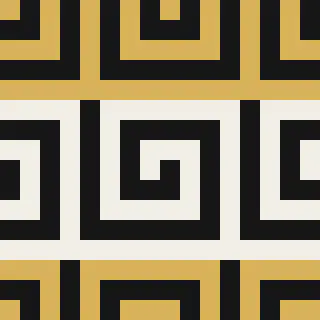
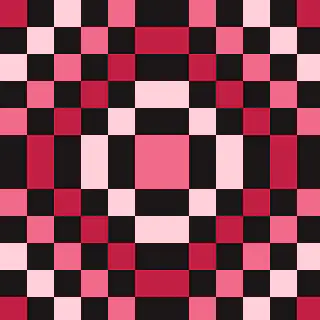
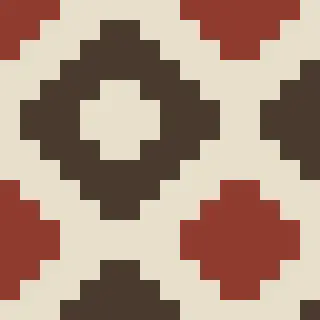
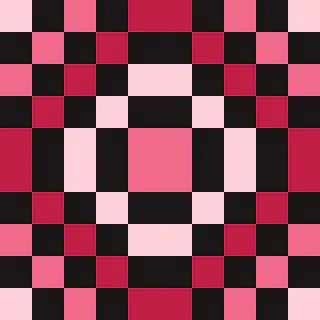
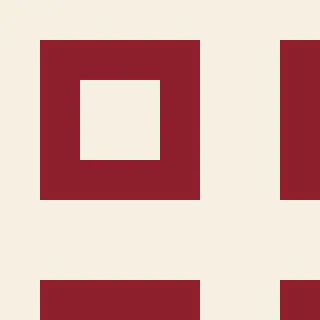
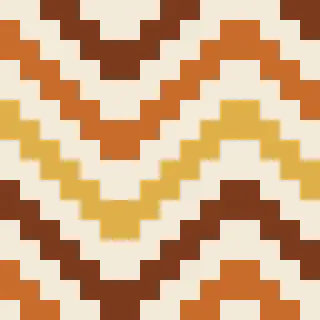
The second is mosaic crochet style charts. These are stepped designs on a stitch grid: diamonds, square rings, stepped chevrons and meanders, drawn in bold one-stitch lines. They follow the look of overlay mosaic crochet, but they are color charts, not row-by-row crochet instructions.
How to use mosaic patterns
Pick the Voronoi cells for a loose, natural look, for backgrounds, scrapbook paper and wallpaper. Pick the crochet charts for crisp, symmetric geometry, or as a color plan for a blanket or a cross-stitch piece. For either one, a dark grout color makes the pieces stand out on screen, while a light one saves ink when printing at home.
Where does mosaic come from?
The small pieces of a traditional mosaic are called tesserae, usually rough cubes of stone or handmade glass enamel. Some of the earliest known mosaics used natural pebbles, and Bronze Age pebble mosaics have been found at Tiryns in Greece. The Romans laid large floor mosaics across their empire, and mosaic flourished in the Byzantine Empire from the 6th to the 15th centuries.
Sources: Mosaic (Wikipedia)