styles
Medallion patterns
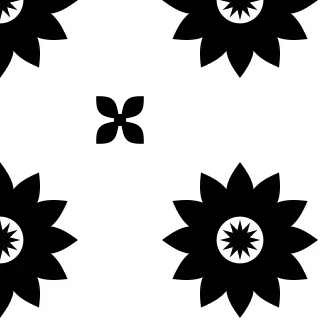
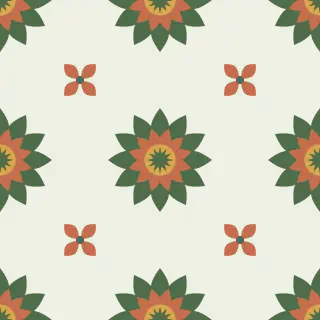
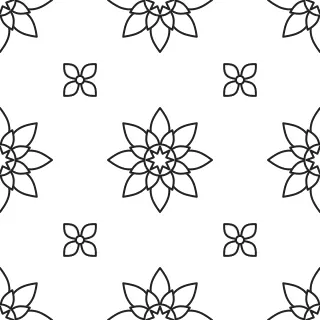
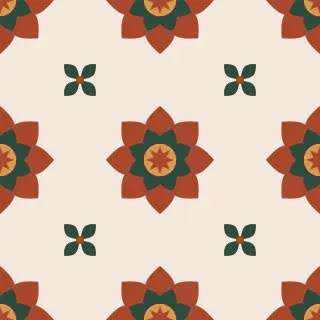
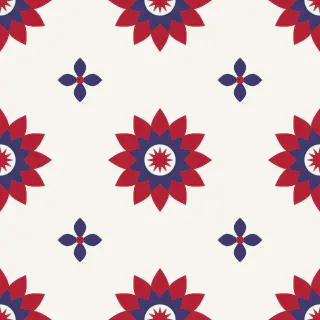
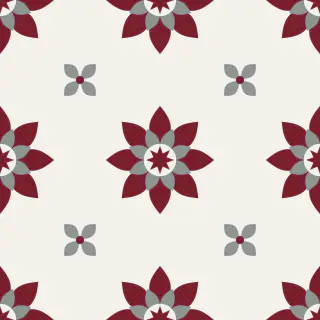
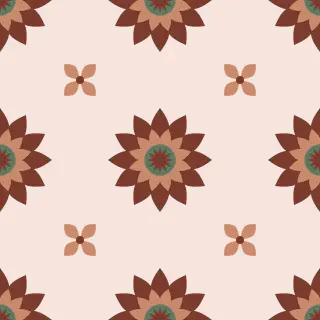
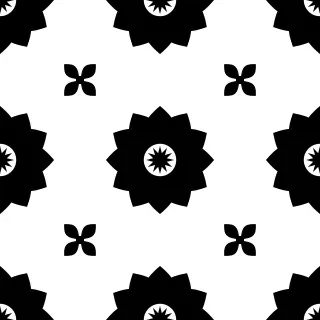
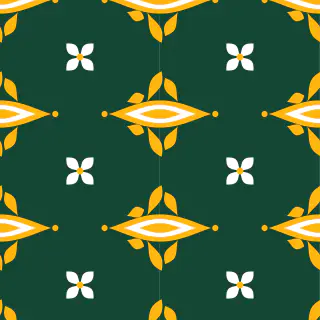
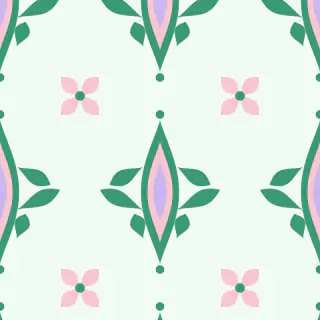
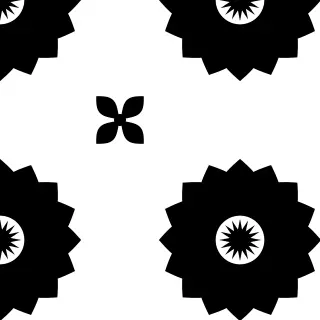
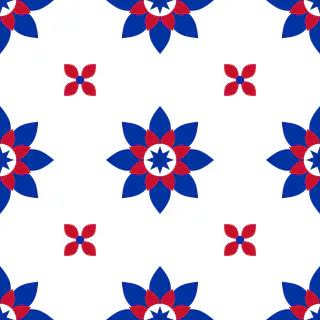
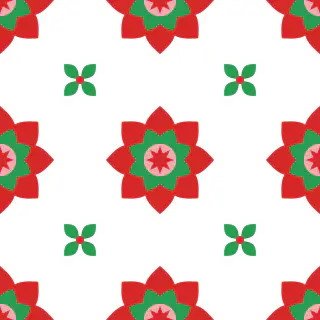
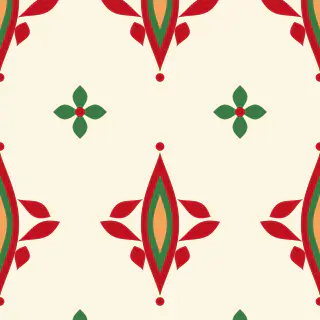
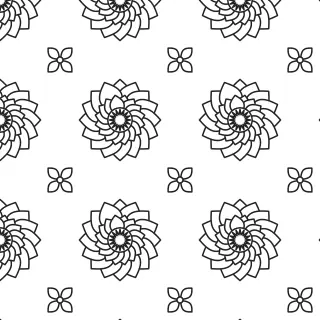
Large round or pointed motifs set in a half-drop, with a small spacer between them, like the field of a carpet or a tiled floor.

























No patterns match this color.
In architecture, a medallion is a round or oval ornament that frames a carved or painted image. These medallions are pattern motifs made from geometry only: rings of petals, stars and discs, with no picture inside.
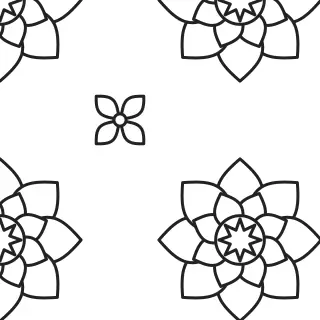
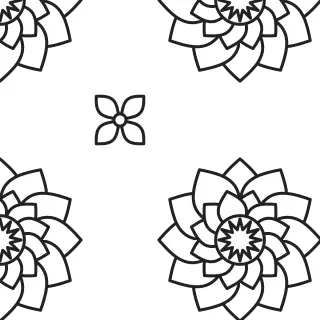
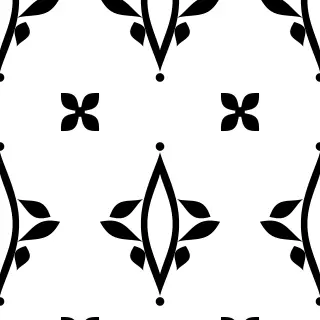
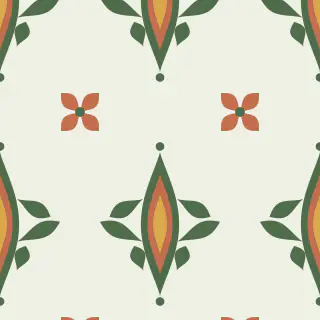
Each tile places one large medallion at its corners and a small four-leaf spacer at its center, so the large motifs fall into a half-drop.
Which medallion to pick
There are three kinds. The rosette has a ring of broad petals, a second ring of smaller petals between them in another color, then a disc and a star at the center. The star rosette uses more, narrower petals, so it reads as a spiky star. The damask medallion swaps the round form for a tall pointed oval with nested ovals, three pairs of side leaves and a small dot above and below. Few broad petals look calm; many thin petals look busy.
How to use medallion patterns
Medallions are a busy ornament, so they hold a surface on their own: book covers, journal wraps, the lining of a gift box. With four colors the petal rings separate clearly; with two, the motif reads as a silhouette. For a personal tumbler wrap by sublimation, a larger scale keeps whole medallions visible instead of cut fragments. To calm the pattern down, make the spacer smaller in the pattern generator.
Where do medallions come from?
Medallions run from Greek and Roman buildings through Byzantine mosaics, Gothic stained glass and Renaissance frescoes. Ceiling medallions, also called ceiling roses, were often cast in plaster and could hold a light fixture. They were especially popular in the Neoclassical period, and Art Deco designers favored geometric, often octagonal ones.
Sources: Medallion (architecture) (Wikipedia)