styles
Geometric patterns
Patterns built from rules: a grid, a tiling or a set of points, with shapes placed by measure rather than by hand.
No patterns match this color.
Geometric patterns have little in common except that each one follows a clear rule, so it helps to know what each rule gives you before you pick.
Kinds of geometric pattern
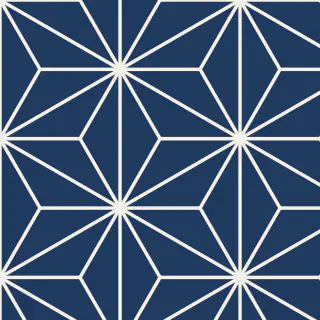
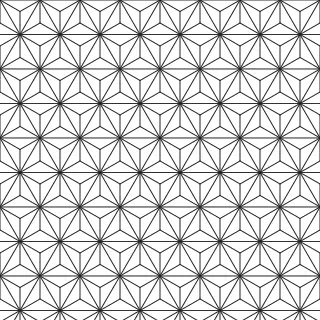
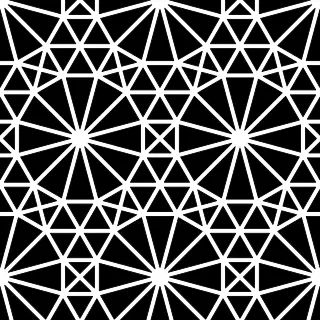
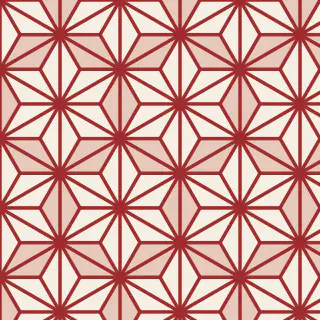
- Asanoha, a Japanese pattern: on a triangle grid, a line runs from each triangle’s center to its corners, and the lines ring into six-pointed stars. Fine, even and quiet.
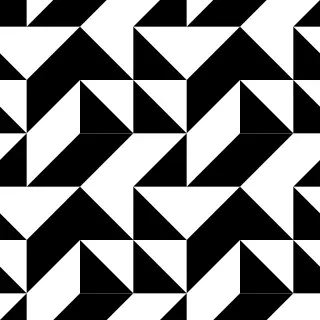
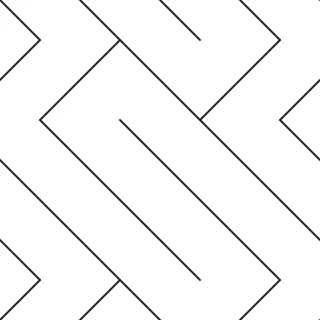
- Truchet tiles: one square cell turned at random across a grid, giving mazes, loops and split squares.
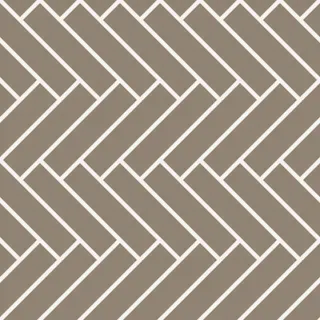
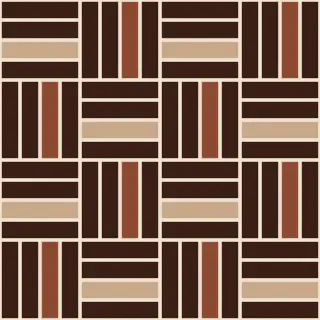
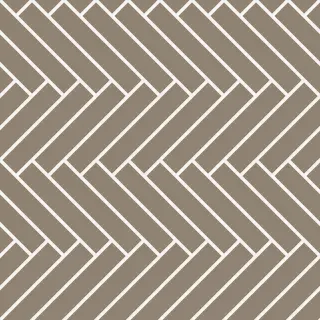
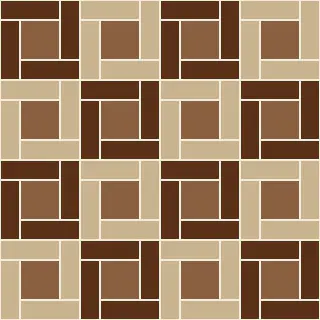
- Herringbone: short bars set in a zigzag, the classic floor and tweed layout.
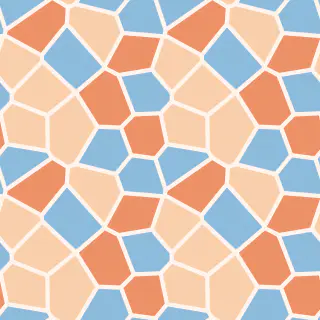
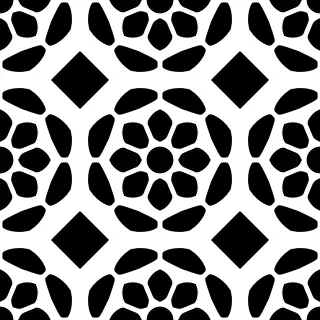
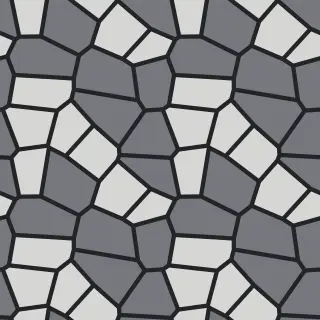
- Voronoi cells: random points split the tile into irregular cells with a grout gap.
- Stencil: cut pieces from a regular tiling, each one kept apart by a bridge so the sheet stays in one piece after cutting.
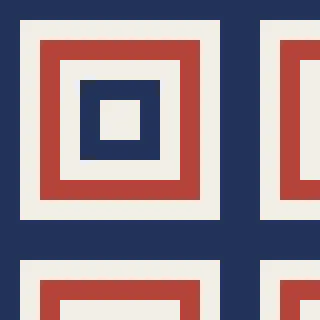
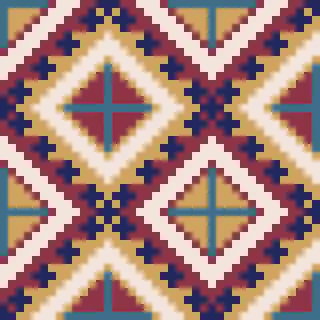
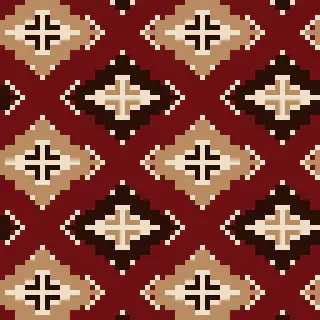
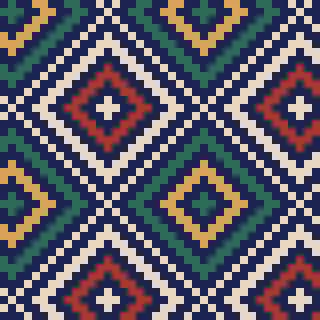
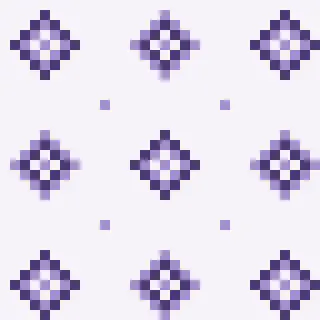
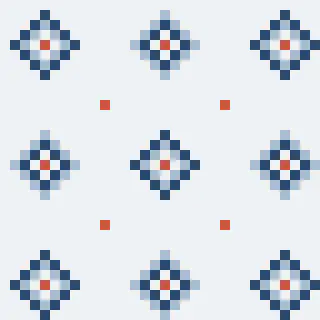
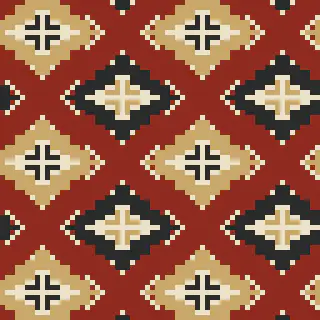
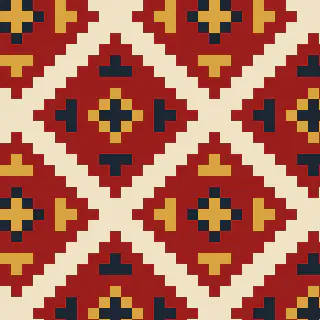
- Mosaic crochet style and cross-stitch motifs: designs on a stitch grid, where every square is one stitch.
Which geometric pattern to pick
For a calm, all-over texture, asanoha and herringbone keep an even density. For movement and surprise, Truchet and Voronoi patterns turn and scatter their shapes at random. For cutting on a Cricut or laser, start with stencils: they are drawn to stay connected, while thin lines in other patterns can snap. For stitching, the grid-based charts map straight to Aida; at 14 count a chart covers more fabric than at 18.
Printing geometric patterns
Scale matters more for geometric work than for florals: a dense tile on a small card can look gray from arm’s length, so size up a step if the shapes blur together. Two colors with strong contrast show the structure best.